
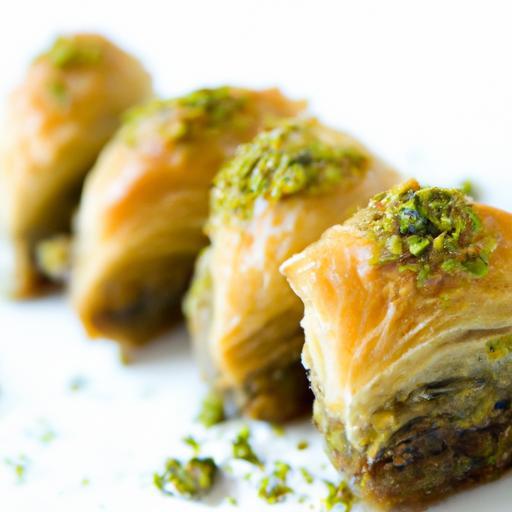
Few desserts can claim a legacy as rich and layered as baklava. With its delicate phyllo layers, golden-hued honey syrup, and fragrant nuts, this sweet, sticky pastry has tantalized taste buds for centuries across continents and cultures. But beyond its irresistible flavor lies a captivating tale-a story woven through ancient empires, vibrant marketplaces, and midnight kitchens. In “Baklava Unveiled: The Sweet History of a Timeless Treat,” we embark on a journey to uncover the origins, evolution, and cultural significance of this iconic dessert, revealing how baklava has become more than just a treat, but a symbol of shared heritage and culinary artistry.
Baklava Unveiled: The sweet History of a Timeless Treat
Baklava unveiled is more than just a dessert; it’s a journey through centuries of culinary artistry and cultural exchange. This luscious pastry, with its delicate layers of flaky phyllo dough, buttery nuts, and fragrant syrup, captivates the senses as much as it intrigues the palate. Whether you’re a seasoned home baker or an adventurous foodie, mastering baklava connects you to a rich tapestry of history and flavor that spans the ancient civilizations of the Mediterranean and Middle East.
Prep and Cook time
- Preparation: 45 minutes
- Cooking: 45 minutes
- Total: 1 hour 30 minutes
Yield
Serves 12 generous pieces
Difficulty Level
Medium – Requires patience layering phyllo and attention to syrup timing
Ingredients
- 1 package (16 oz) phyllo dough, thawed according to package instructions
- 2 cups mixed nuts (walnuts, pistachios, and almonds), finely chopped
- 1 cup unsalted butter, melted
- 1 tsp ground cinnamon
- 1/2 tsp ground cloves
- 1 1/2 cups granulated sugar
- 1 cup water
- 1/2 cup honey
- 1 tbsp fresh lemon juice
- 1 tsp vanilla extract
Instructions
- Preheat your oven to 350°F (175°C). Lightly grease a 9×13 inch baking pan with some of the melted butter.
- Prepare the nut mixture: Combine the finely chopped nuts, cinnamon, and cloves in a bowl. Set aside.
- Layer the phyllo: Unroll the phyllo dough carefully. Cover with a damp towel to prevent drying out. Place one sheet in the pan and brush generously with melted butter. Repeat layering and buttering about 8 sheets.
- spread the nut mixture evenly over the layered phyllo base, pressing gently.
- Continue layering phyllo sheets: Add layers on top of nuts,brushing each with butter,until all sheets are used-about 8-10 sheets. Save some butter to brush the very top layer thoroughly.
- Score the baklava: Using a sharp knife, cut through to the bottom into diamond or square shapes. This helps the syrup absorb after baking.
- Bake the baklava: Place in the preheated oven and bake for 45-50 minutes or until golden and crisp.
- Make the syrup: While baklava bakes,combine sugar,water,honey,lemon juice,and vanilla in a saucepan. Bring to a boil, then simmer for 10 minutes until slightly thickened.
- Pour syrup over baklava: Remove baklava from oven and immediately spoon the hot syrup evenly over the hot pastry. The syrup will sizzle and soak in deeply.
- Cool completely: Let the baklava rest for at least 4 hours, preferably overnight, to absorb the syrup fully and develop its signature texture.
Chef’s Notes: Tips for Success
- Phyllo handling: Patience is key; always cover unused sheets to keep them moist and flexible.
- Nut choices: Experiment with regional nuts such as walnuts from the Balkans or shining green Turkish pistachios for authenticity.
- Syrup temperature: Pour warm syrup over hot baklava to maximize absorption and crispness.
- Make ahead: Baklava improves with time; prepare a day in advance and store covered at room temperature.
- Vegan variation: Substitute butter with vegan margarine and use agave syrup instead of honey.
serving Suggestions
Present your baklava on a decorative plate sprinkled with crushed pistachios or edible rose petals for a visual feast. Pair with a strong cup of turkish coffee or fragrant black tea to balance sweetness with robust bitterness. A dollop of lightly whipped cream or a scoop of vanilla bean ice cream adds contrast between warm and cold, crumbly and creamy. For a festive touch, drizzle with extra honey infused with orange blossom water.

| Nutrient | Per Serving |
|---|---|
| Calories | 320 kcal |
| Protein | 5 g |
| Carbohydrates | 35 g |
| Fat | 18 g |
Explore More
Intrigued by traditional sweets? discover how to make Maamoul: The Perfect Date-Filled Middle Eastern Cookie and expand your Middle Eastern dessert repertoire.
For an in-depth past viewpoint on baklava and its many variations, visit Britannica’s comprehensive guide.
Q&A
Q&A: Baklava Unveiled – The Sweet History of a Timeless Treat
Q1: What exactly is baklava?
A: Baklava is a rich, sweet pastry made of layers of flaky phyllo dough, generously filled with chopped nuts-often pistachios, walnuts, or hazelnuts-and drenched in fragrant honey or syrup. It’s a decadent dessert that marries crisp texture with syrupy sweetness, a treat beloved across many cultures.
Q2: Where does baklava originally come from?
A: The origins of baklava are as layered as the pastry itself! While its exact birthplace is debated, baklava is widely believed to have roots in the ancient Middle East, with influences from the Ottoman Empire. It’s a culinary mosaic crafted through centuries in regions spanning from Anatolia (modern-day Turkey) to greece and the Levant.
Q3: how has baklava evolved over time?
A: Baklava’s journey is a story of cultural fusion and refinement. Early versions featured fewer layers and more basic sweeteners like crushed nuts with honey. Over time, techniques perfected under Ottoman rule gave us the ultra-thin phyllo sheets and syrup-soaking method that maximize crispness and flavor. Today, baklava comes in countless regional varieties, each with unique nut choices, spices, and presentation styles.
Q4: What makes baklava so special compared to other desserts?
A: It’s baklava’s intricate balance of textures and flavors that sets it apart. The delicate crunch of multiple phyllo layers contrasts with the tender,nutty filling,all elevated by the aromatic syrup infusion. This creates a multisensory experience-not just a bite of sweetness, but a rich, cultural story told through pastry.
Q5: Are there any symbolic or cultural meanings behind baklava?
A: Absolutely! Baklava often shines during festive occasions, celebrations, and holidays such as Ramadan, Eid, and Orthodox Easter. Its sweetness represents joy, prosperity, and hospitality. Serving baklava is more than offering dessert-it’s an ancient gesture of warmth and community.
Q6: Can baklava be made without nuts or honey?
A: While traditional baklava is defined by its nutty and honeyed layers, modern baklava-adaptations exist. Some variations use option fillings like coconut or chocolate, and syrup substitutes rather of honey. However, purists say that nothing quite captures the authentic essence without those signature nuts and honey.
Q7: How should baklava be stored and served for best taste?
A: Baklava is best enjoyed fresh to savor its crisp layers. Stored in an airtight container at room temperature, it can last several days without losing its magic. Some even believe that flavors meld and improve after resting overnight! Serve at room temperature, perhaps alongside a cup of strong coffee or fragrant tea, to enjoy its full aromatic profile.Q8: What is the secret to mastering homemade baklava?
A: Patience and precision are key. Handling ultra-thin phyllo dough without drying or tearing requires a gentle touch. Equally notable is balancing the syrup’s sweetness-not to watery, not too sticky.Layering should be even, and don’t rush the baking; a golden, crisp top is the hallmark of success.
Baklava isn’t just a dessert; it’s a delicious bridge across cultures and centuries, inviting anyone who tastes it into a shared tradition of sweetness and festivity. So next time you savor a piece,you’re tasting history itself-layer by luscious layer.
Key Takeaways
As the final layers of honey-soaked phyllo dissolve on your tongue, it’s clear that baklava is far more than just a dessert-it’s a delicious tapestry woven from centuries of culture, trade, and tradition. From its mysterious origins to its celebrated place on tables around the world, baklava invites us to savor not only its rich, nutty sweetness but also the stories and histories it carries. So, the next time you indulge in this timeless treat, remember: each bite is a delightful journey through time, bridging continents and generations with every flaky, sugary morsel.